Language
"Every time you say 'tea,' you're speaking Fujian."
English tea — Dutch thee, French thé — comes from the Minnan pronunciation tê, carried home by Dutch traders at Amoy.
Language
"Your tea menu is written in Fujian's dialect."
Bohea, congou, pekoe, souchong, oolong — the colonial-era English tea lexicon transliterates Minnan terms.
Language
"The word 'satin' is a Fujian place name."
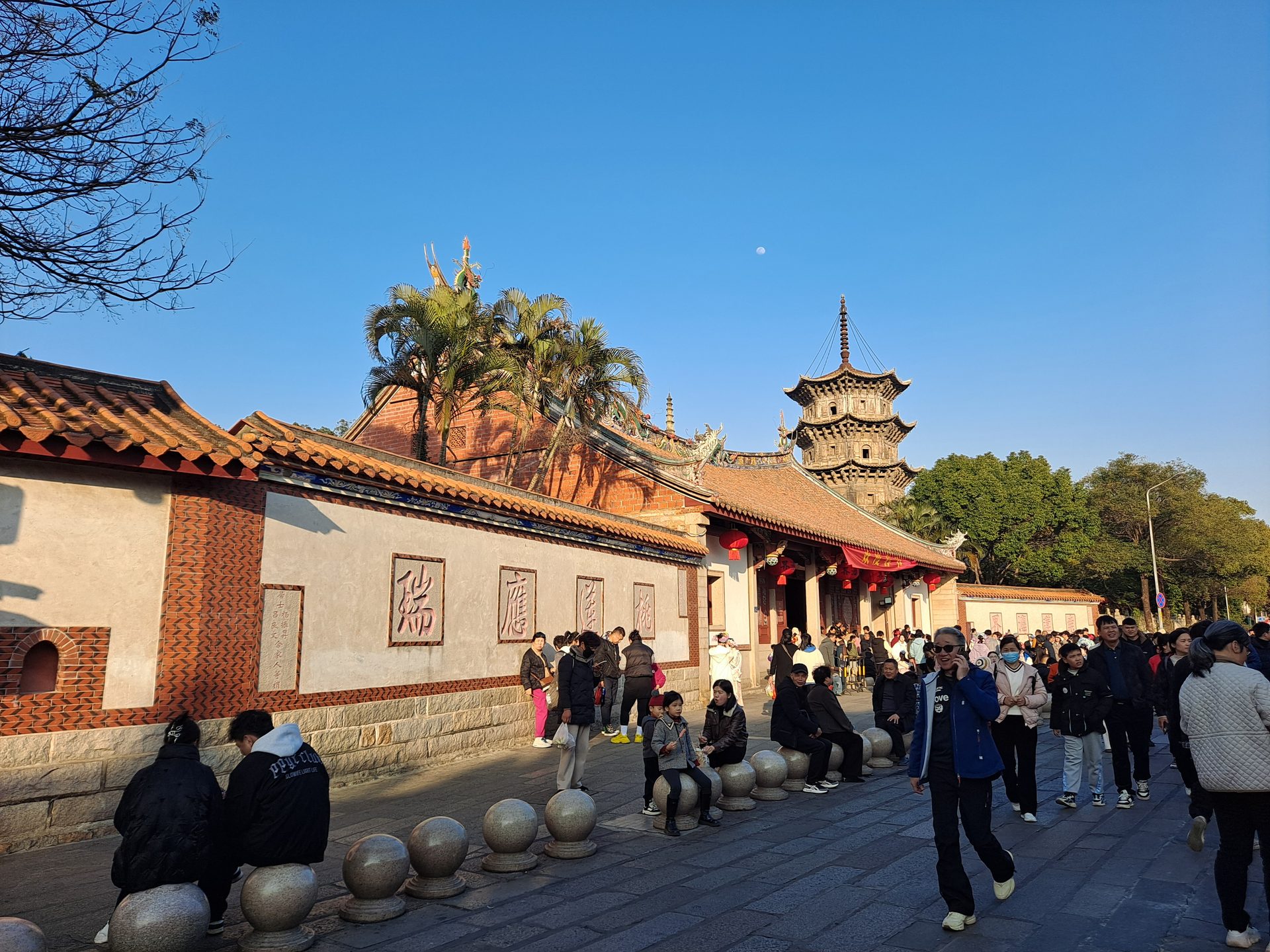
Satin comes from Zayton — Quanzhou — the port whose silks gave the fabric its Western name.
Language
"The word on every Heinz bottle may be Minnan for fish sauce."
Ketchup likely derives from the Amoy word kê-chiap, a brined fish sauce — a live etymology, still debated.
Language
"The West never called it 'Xiamen.'"
For 300 years the West said Amoy, Foochow, Quemoy — Fujian's places in Fujian's own dialect, not Mandarin.
Tea
"Nixon walked away from China holding half its country — in tea leaves."
Legend has it Mao gifted Nixon 4 liang of Da Hong Pao in 1972, joking "half my country is in your hands." Beloved anecdote; the mother trees are real.
Tea
"That oolong at every American Chinese restaurant? Born here."
Tieguanyin, the world's most famous oolong, originated in Anxi, Fujian, in the Qing dynasty.
Tea
"America's wellness obsession started in a Fujian village 1,000 years ago."
White tea was grown around Fuding in the Tang dynasty; Silver Needle is now a North American wellness staple.
Tea
"The world's first black tea seeded India's tea industry."
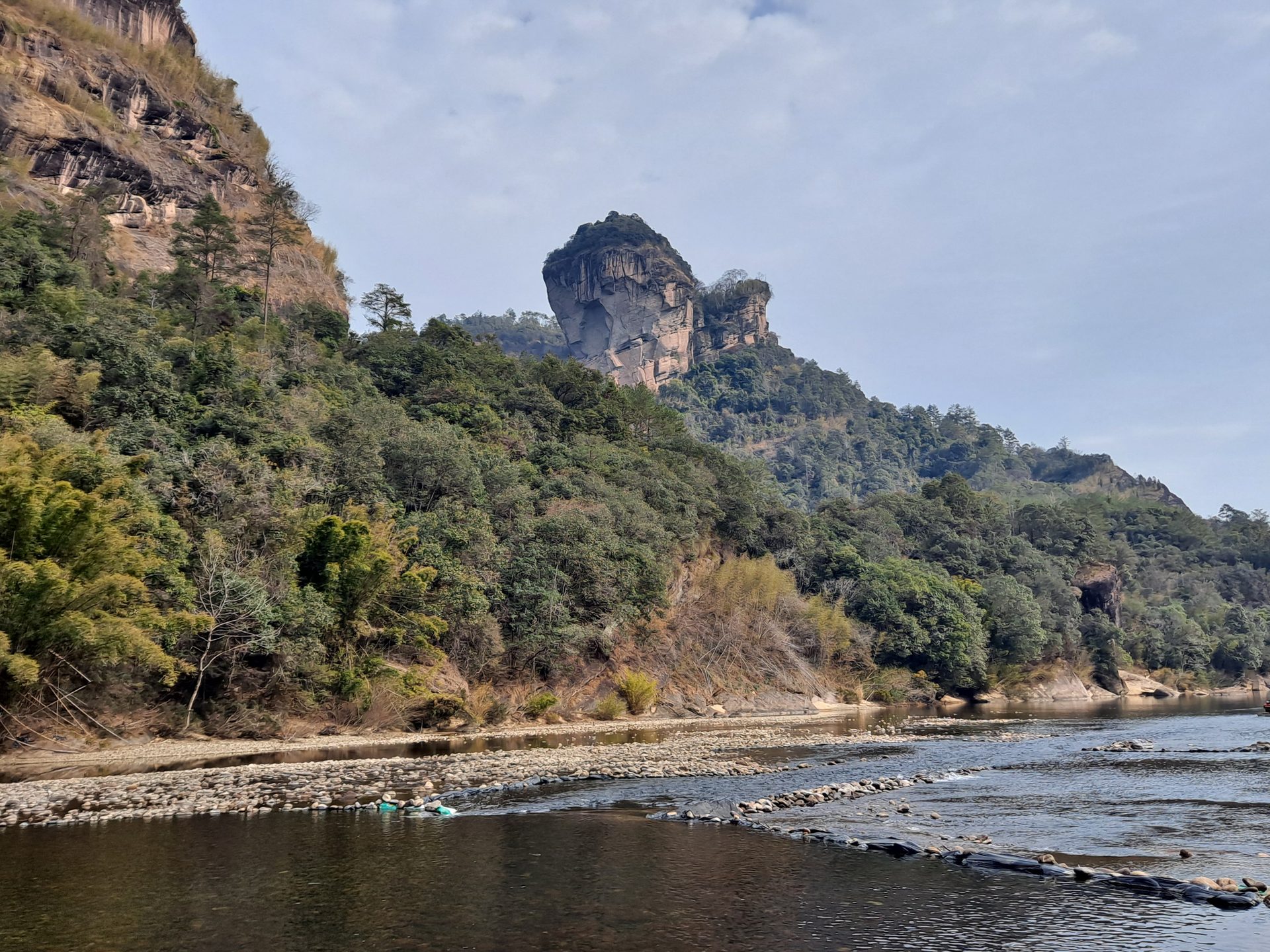
Lapsang Souchong was born at Tongmu in the Wuyi Mountains; Robert Fortune carried Fujian plants — and eight Fujian tea masters — to India in 1848–51.
Tea
"In 1866, all of London bet on Fujian tea."
Sixteen clippers raced from Foochow to London in the Great Tea Race — the 19th century's most-watched sporting event.
Tea
"A Fujian tea once sold for ~90× the price of gold."
In 2005, 20 grams of Da Hong Pao mother-tree tea fetched ¥208,000 — by weight, among the priciest teas ever sold.
Porcelain & Craft
"Japan's most sacred tea bowls were born in a Fujian kiln."
The revered tenmoku bowls of Japanese tea ceremony are Jian Zhan — black-glazed stoneware from Jianyang, Fujian.
Porcelain & Craft
"Fuzhou's signature export art was born from a German postcard."
Fuzhou cork pictures (软木画) — landscapes carved in cork bark — began when local artists studied a German greeting card.
Maritime & Trade
"Before Europe's age of exploration, the world's largest fleet left from Fujian."
Zheng He's treasure fleet mustered at Changle, Fujian; his 1431 inscription still stands at the Tianfei temple there.
Maritime & Trade
"Fujian dishes were buried under a Mexican cathedral before the Pilgrims landed."
Manila galleons carried Fujian porcelain to Acapulco; Mexican archaeologists found a 400-year-old Zhangzhou-ware shipment there.
Maritime & Trade
"When China opened to the West, the door swung on Fujian hinges."
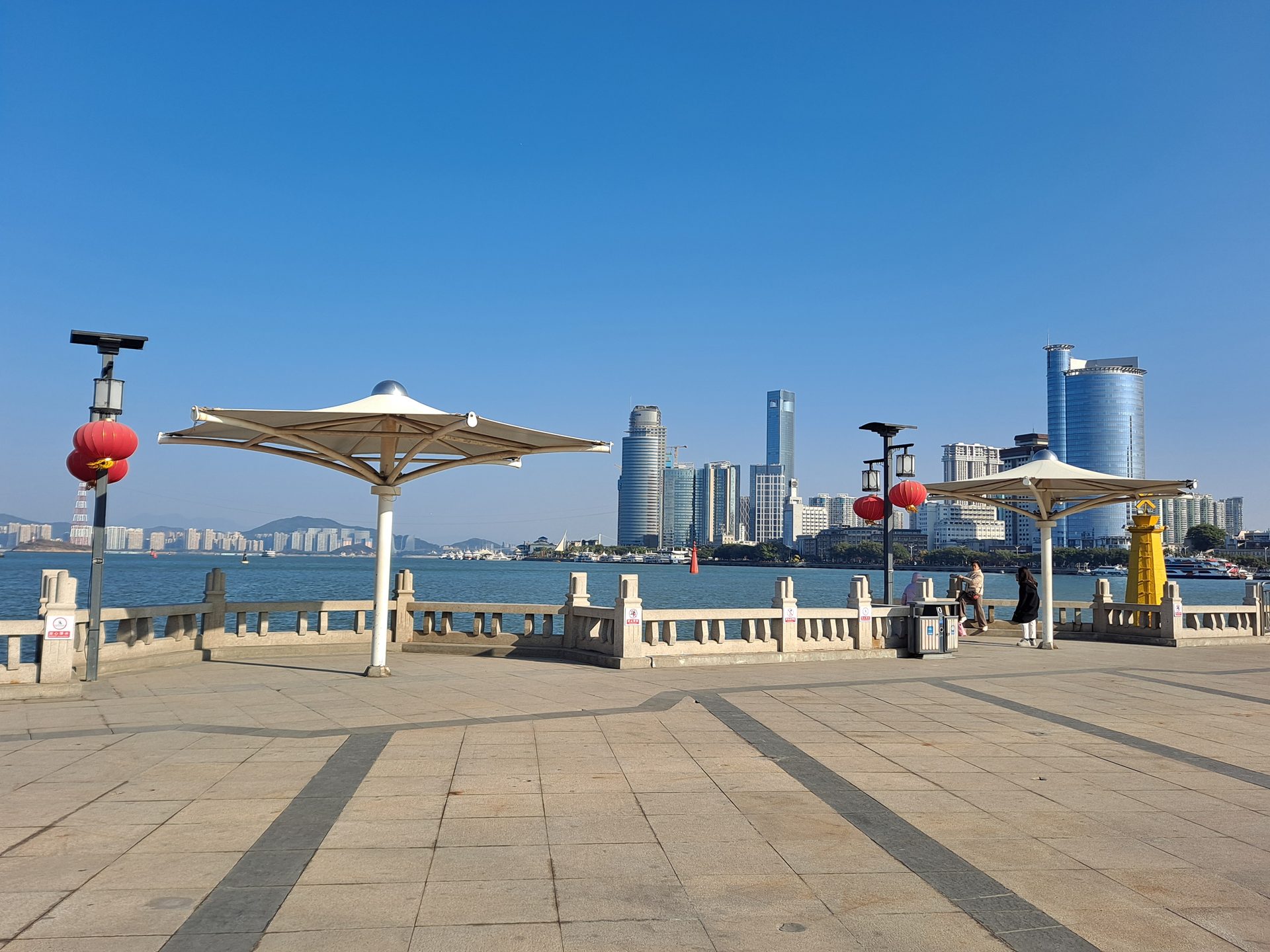
Amoy (Xiamen) and Foochow (Fuzhou) were two of the five treaty ports opened in 1842.
Maritime & Trade
"France built Fujian's navy — then sank it."
The Foochow Arsenal (1866) was built with French officers; the French fleet destroyed it in 1884. The site still stands at Mawei.
People
"The man who stood up to the British Empire was born in Fuzhou."
Lin Zexu (1785–1850) — of the 1839 Humen opium destruction — was a Fuzhou native; his memorial hall stands in the city.
People
"The Dutch East India Company met its match in a Fujian man."
Zheng Chenggong sailed from Xiamen in 1661 and ended 38 years of Dutch rule in Taiwan in 1662.
People
"Singapore's greatest tycoon built schools back home in Fujian."
Tan Kah Kee — the "Henry Ford of Malaya" — founded Xiamen University in 1921 with his fortune.
People
"From a two-square-kilometer island to Carnegie Hall."
Yin Chengzong, born on Gulangyu, became one of China's defining pianists — co-creator of the Yellow River Piano Concerto.
People
"The greatest badminton player in history is from Fujian."
Lin Dan — "Super Dan," double Olympic champion — was born in Longyan, Fujian.
People
"The man who taught America how to live was from Zhangzhou — and went to Harvard."
Lin Yutang, born in Zhangzhou, wrote The Importance of Living — America's #1 bestseller of 1938 — in English.
People
"China first met Adam Smith through a man from Fuzhou."
Yan Fu translated Huxley, Adam Smith, Mill, and Montesquieu into Chinese — the Western canon, in classical Chinese prose.
People
"The chemistry behind the world's glass and soap was invented by a Columbia PhD from Fuzhou."
Hou Debang (PhD Columbia, 1921) invented the Hou process for soda manufacture — still used worldwide.
Diaspora
"A corner of Iowa sat on a Fujian mountaintop."
American missionary families summered at Kuliang (Guling) above Fuzhou from the 1880s; the Kuliang story still anchors people-to-people exchange.
Diaspora
"Before Ellis Island, Fujian's poor crossed a different ocean."
Amoy was a 19th-century departure port of the coolie trade — some 225,000 laborers shipped to Cuba and Peru, 1847–1874. Told as history, with care.
Diaspora
"There's a piece of Fujian in Manhattan — you've walked past it."
East Broadway's "Little Fuzhou" is the largest Fuzhou diaspora community outside China.
Diaspora
"You've already tasted Fujian in New York."
Fish balls, peanut noodles, oyster omelette — Little Fuzhou's kitchens run on home-province recipes. Come meet the originals.
Food
"A dish so fragrant it made Buddha jump a wall."
Buddha Jumps Over the Wall (佛跳墙), Fuzhou's legendary banquet dish, was already documented in San Francisco in 1979.
Food
"The pork bun that conquered New York and London was born in Fuzhou."
Gua bao (刈包) — the folded pork bun Momofuku made famous — is Fuzhou street food.
Food
"One of Southeast Asia's most famous noodle dishes is literally called 'Fujian.'"
Hokkien mee (福建面) — "Fujian noodles" — carries the province's name across Malaysia and Singapore.
Food
"Xiamen's favorite noodle soup is named after Malaysian satay."
Shacha noodles (沙茶面): the name is Minnan for Malay sate — a 200-year round trip in a bowl.
Music & Arts
"A thousand-year-old Fujian song, kept alive on the world stage."
Nanyin (南音) — the "living fossil" of Minnan music — is UNESCO intangible heritage, performed today in Quanzhou and Xiamen.
Music & Arts
"An island smaller than Central Park, with 600 pianos."
Gulangyu's "Piano Island" nickname is earned — extraordinary piano density on two square kilometers.
History
"In 1960, two future presidents argued on live TV about islands off Fujian."
Kennedy and Nixon debated Quemoy and Matsu in the televised debates — Fujian's offshore islands in American prime time.
History
"St. Augustine's old religion survives in exactly one intact temple — in Fujian."
The Cao'an temple in Jinjiang is the world's best-preserved Manichaean temple; Augustine was a Manichee before his conversion.
History
"A wartime bond rarely taught."
After the Doolittle Raid, US airmen came down across several provinces including Fujian; Chinese civilians rescued survivors at grave personal risk.